Former AP journalist talking about the bias in Israel coverage, which he saw starting 15 years ago.
- Calling it the Israel-Palestine conflict to frame it as Israel being stronger (supposed oppressor), when it's actually a regional conflict where Israel is vastly outnumbered from all sides.
- Positive stories about Israel, like offering a Palestinian state (which Palestinians rejected), were quashed.
- Left-run media and NGOs have abandoned journalism and neutrality for ideological political activism.
- Left-run media take Hamas propaganda as gospel, with many journalists in Gaza working for or being intimidated by Hamas... including removing the fact the Hamas soldier dress as civilians to limit the count of combatant deaths.
...
The problem is that there isn't an Israeli-Palestinian conflict. And I know that sounds crazy because everyone thinks there is. ... But most of Israel's wars have not been fought against Palestinians. Israel has unfortunately fought wars against Egyptians and Jordanians and Lebanese and Iraqis. And Israel's most important enemy at the moment is Iran, right? The Iranians are not Palestinian. Um, the Iranians are not Arab. They're Muslim, but they're not Arab. So clearly there is a broader regional conflict that's going on that is not an Israeli-Palestinian conflict. And we've seen it in the past year if we had a satellite in space looking down and just following the paths of ballistic missiles and rockets fired at Israel. So we just have, like, a photograph of these red trails of rockets fired at Israel. You'd see rockets being fired from Iraq and from Yemen and from Lebanon and from Gaza and from Iran; you'd see the contours of a regional conflict. And if you understand it's a regional conflict and you understand the way Israelis see it, there are 300 million people in the Arab world,almost all of them Muslim, and in one corner of that world there are 7 million Jews who are Israelis. ... The entire Jewish population on planet earth is a lot smaller than the population of Cairo, so the idea that this is an Israeli-Palestinian conflict where Israelis are the stronger side, where Israelis are the dominant actor, and where Israelis are, let's face it, the bad guy in the story—that's a fictional presentation of a story that actually works in a completely different way. So if you take a small story and make it seem big, and if you take a complicated regional story and you make it seem like a very small local story involving only Israelis and Palestinians, then you get the highly simplified but very emotive narrative that everyone is being subjected to now. And you get this portrayal of a villainous country called Israel that really looms in the liberal imagination of the West as an embodiment of the worst possible qualities of the age.
...
But the issues that I saw in the press 15 years ago have only been exacerbated since then. And October 7th didn't invent the wheel;the issues were pre-existing, but it took everything that I saw and kind of supercharged it. So if I talked about ideological conformity in the bureaus, um, that has been, that has become much more extreme.
...
what I saw happening at the AP and I hate picking on the AP because they were just unfortunate enough to hire me That was their only error, but what I'm saying about them is true of the whole news herd. It's true of the times and CNN and the BBC. The news industry really works kind of as if it has a herd mentality. What happened was that news decisions were increasingly being made by people who were not interested in explanatory journalism. They were activists. Activists had moved into the key positions in the bureau, and they had a very different idea of what press coverage was supposed to do.
...
At the very end of 2011—uh, sorry, at the very end of 2008—um, two reporters in my bureau, people who I know, um, learned of a very dramatic peace offer that Prime Minister Aud had made to the Palestinians. So Mer, who was the prime minister at the time, had made a very far-reaching offer that was supposed to see a Palestinian state in all of Gaza and most of the West Bank with land swaps for territory that Israel was going to retain and a very far-reaching international consortium agreement to run the old city of Jerusalem. It was very dramatic; it was so far-reaching. I think that Israelis probably wouldn't have supported it, but it was offered to the Palestinian side, and the Palestinians rejected it as insufficient. And, um, two of our reporters knew about this, and they'd seen a map of the offer, and this was obviously a pretty big story for a bureau that had as the thrust of its coverage the peace process. Um, the two reporters who had the story were ordered to drop it. They were not allowed to cover the story, and there were different explanations, and they didn't. By the way, AP did not publish the story at the time even though we were the first to have it. Eventually it kind of came out in other ways through other news organizations, but we knew at first why we were not allowed to cover it: because it would have made the Israelis, whom we were trying to villainize and demonize, It would have made Israel seem like it was trying to solve the conflict on kind of unreasonable lines, which of course was true at that time. So that story would have upended the thrust of our news coverage, so it had to be made to go away even though it was true. It would have helped the wrong people. And that question of who does this serve has destroyed—I don't want to say all, but much of what used to be mainstream news coverage. And it's not just where Israel is concerned.
...
So my problems in the AP bureau 15 years ago were really a kind of maybe a canary in the coal mine or a whiff of something much bigger that we were all going to see happen, which is the transformation of the important liberal institutions of the West into kind of activist arms of a very radical ideology that has as its goal the transformation of the West into something else, and that's true of the press, and it's true of the NGO world, places like Human Rights Watch and Amnesty International, which were one thing 30 years ago and are something very different today.
...
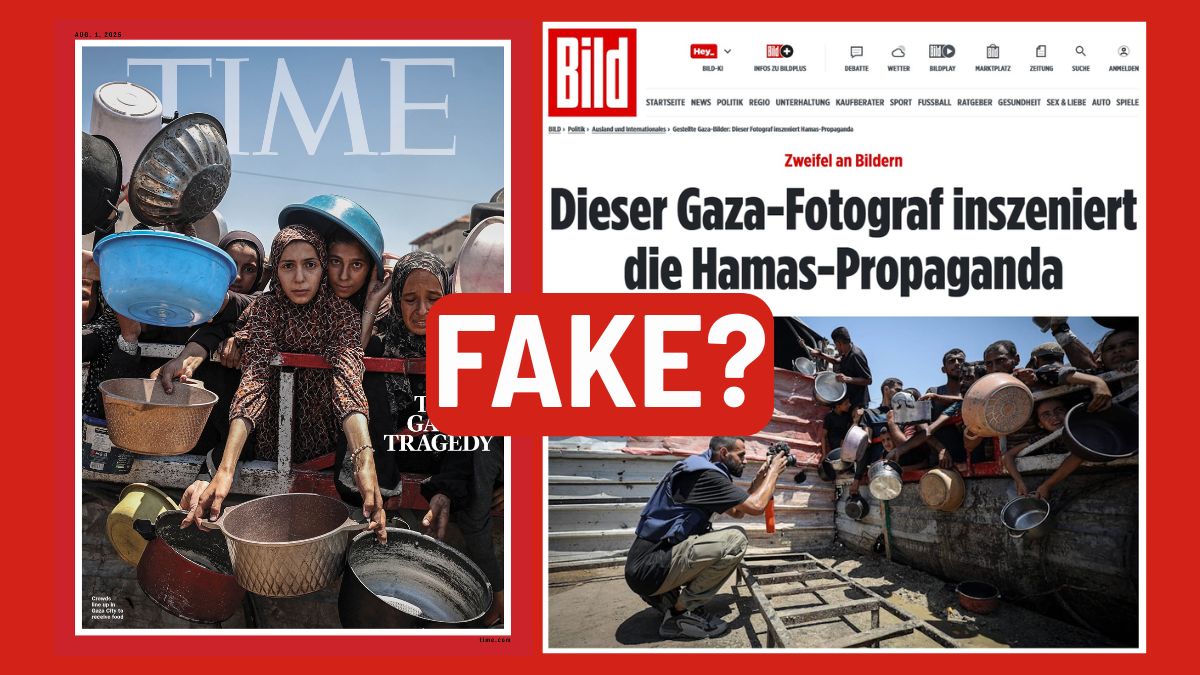
And you, you'll never see Hamas militants in uniform in Gaza; you just see dead civilians, and you'll see the aftermath of a rocket strike when, you know, an Israeli F-16 takes out the launcher, but you will never see the strike. Um, and that is the way it's worked in Gaza since the very end of 2008, which is when the first really bad round of violence in Gaza happened, which is when I was at the AP. As far as I know, I was the first staffer to erase information from a story because we were threatened by Hamas, which happened at the very end of 2008. We had a great reporter in Gaza, a Palestinian who had always been, um, really an excellent reporter. We had a detail in a story. The detail was a crucial one: it was that Hamas fighters were dressed as civilians and were being counted as civilians in the death toll. An important thing to know—um, that went out in an AP story. The reporter called me a few hours later. It was clear that someone had spoken to him, and he told me I was on the desk in Jerusalem. So I was kind of writing the story from the main bureau in Jerusalem, and he said, "Mati, you have to take that detail out of the story," and it was clear that someone had threatened him. I took the detail out of the story. I suggested to our editors that we note in an editor's note that we were now complying with Hamas censorship. I was overruled, and from that point in time, the AP, like all of its sister organizations, collaborates with Hamas censorship in Gaza. What does that mean? You'll see a lot of dead civilians, and you won't see dead militants. You won't have a clear idea of what the Hamas military strategy is. And—and this is the kicker—the center of the coverage will be a number, a casualty number that is provided to the press by something called the Gaza Health Ministry, which is Hamas. And we've been doing that since 2008, and it's a way of basically settling the story before you get into any other information. Because when you put, you know, when you say 50,000, 50, 50 Palestinians were killed and one Israeli on a given day, you know, it doesn't matter what else you say; the numbers kind of tell their own story. And it's a way of kind of settling the story with something that sounds like a concrete statistic. And the statistic is being, you know, given to us by one of the combatant sides, but because the reporters sympathize with that side, they're happy to—they're happy to play along. So since 2008, and certainly since 2014, when we had another serious war in Gaza, the press has not been covering Gaza. The press has been essentially an amplifier for one of the most poisonous ideologies on earth. Hamas has figured out how to make the press amplify its messaging rather than covering Hamas. There are no Western reporters in Gaza. All of the reporters in Gaza are Palestinians, and those people fall into three categories. Some of them identify with Hamas. Some of them are intimidated by Hamas and won't cross Hamas, which makes a lot of sense. I wouldn't want to cross Hamas either. And the third category is people who actually belong to Hamas. That's where the information from Gaza is coming from, and if you're credulous, then of course you're going to get a story that makes Israel look pretty bad.
...